 Reading Time: 2 minutes
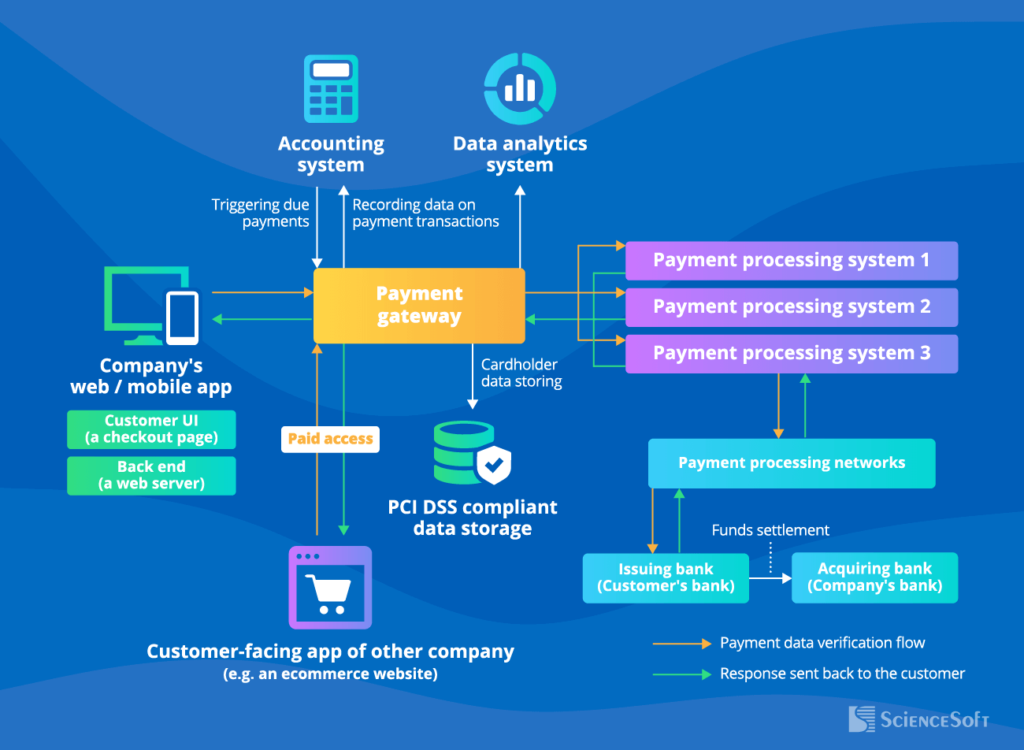
Image Source: https://www.scnsoft.com/finance/payment/gateway-development/architecture.png
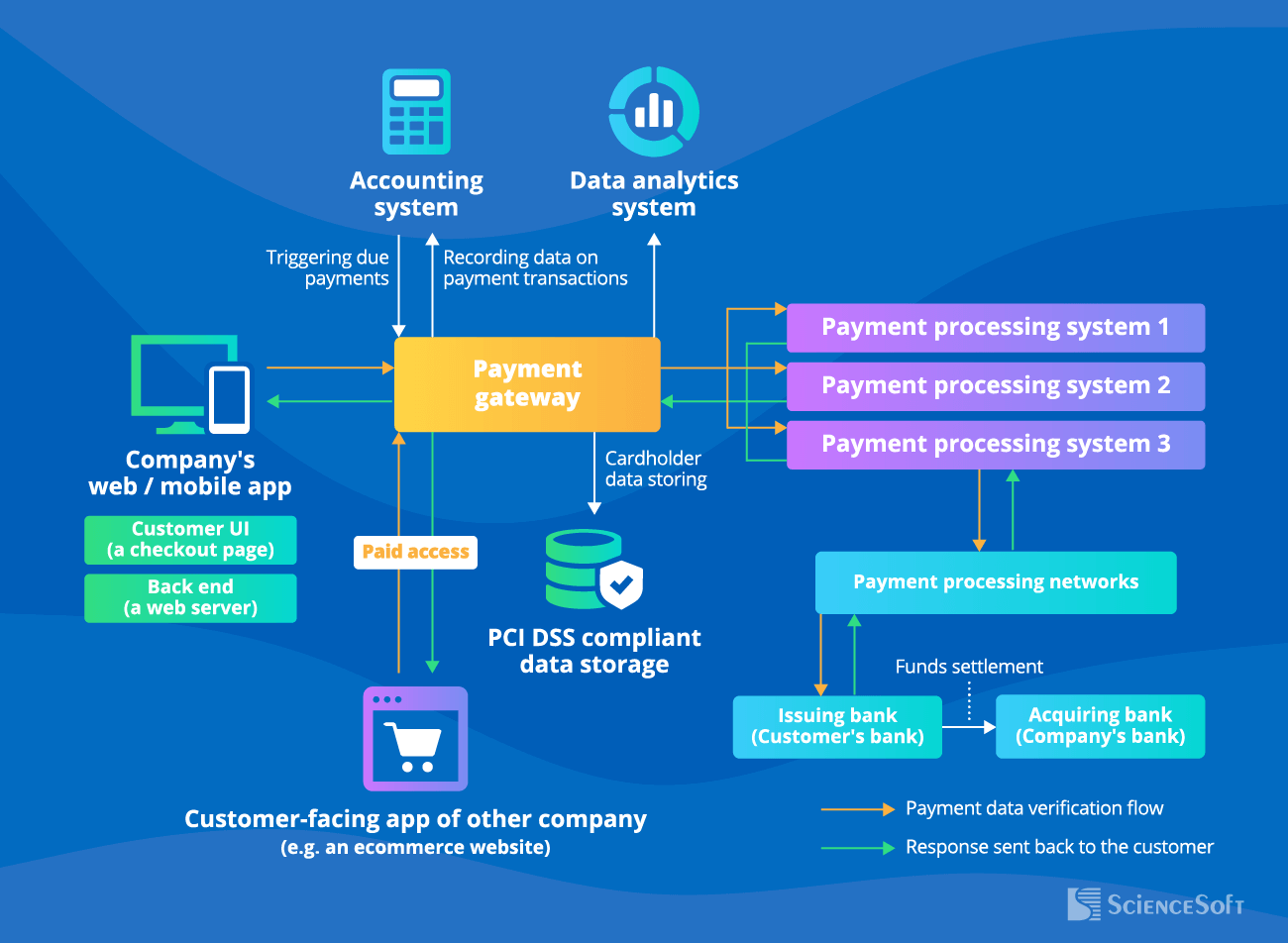
A payment gateway is a secure interface that facilitates online transactions by acting as a bridge between customers, merchants, and financial institutions. It ensures the secure transfer of payment data, processes transactions, and communicates the results back to the merchant’s system. Payment gateways are integral to e-commerce platforms, enabling seamless and secure payment experiences.
Key Components of Payment Gateway Architecture
- Customer Interaction: The process begins when a customer initiates a payment on a merchant’s platform. This could involve entering card details, selecting a digital wallet, or using UPI.
- Payment Gateway: The gateway collects and encrypts sensitive payment information, ensuring secure transmission to the payment processor or acquiring bank.
- Payment Processor: The processor communicates with the issuing bank or card network (e.g., Visa, Mastercard) to validate the transaction and check for sufficient funds.
- Merchant System: The merchant’s platform receives the transaction status (success or failure) from the gateway and updates the order accordingly.
- Settlement: Once approved, the funds are transferred from the customer’s bank to the merchant’s account, completing the transaction.
Types of Payment Gateways
- Hosted Payment Gateway: Redirects customers to a third-party page for payment processing, ensuring high security but less control over the user experience.
- Self-Hosted Payment Gateway: The merchant collects payment details directly on their platform, offering faster checkout but requiring robust security measures.
- API-Hosted Gateway: Integrates payment processing directly into the merchant’s system via APIs, providing flexibility and customization.
- Local Bank Integration Gateway: Redirects customers to their bank’s page for payment, suitable for basic payment needs.
- Off-Website Payment Gateway: Supports external payment methods like wallets or UPI, offering diverse payment options.
Security Features
- SSL/TLS Protocols: Encrypts data during transmission to prevent unauthorized access.
- PCI DSS Compliance: Ensures secure handling of cardholder data through standardized security measures.
- Tokenization: Replaces sensitive payment data with unique tokens, reducing the risk of data breaches.
- Address Verification Service (AVS): Verifies the billing address to detect fraudulent transactions.
- 3-D Secure Protocol: Adds an extra layer of authentication for card-based payments.
Implementation in Architectures
Monolithic Architecture
In a monolithic setup, the payment gateway is integrated directly into the application. The system handles payment initiation, processing, and callback handling within the same codebase. For example:
@PostMapping(“/payment/callback”)
public ResponseEntity<String> handleCallback(@RequestBody PaymentResponse response) {
if (“SUCCESS”.equals(response.getStatus())) {
orderService.updateOrderStatus(response.getOrderId(), “PAID”);
return ResponseEntity.ok(“Payment Successful”);
} else {
orderService.updateOrderStatus(response.getOrderId(), “FAILED”);
return ResponseEntity.badRequest().body(“Payment Failed”);
}
}
Microservices Architecture
In microservices, the payment service operates independently, communicating with other services (e.g., order service) via APIs or message queues. This decoupled approach enhances scalability and fault tolerance. For example:
@Retry(name = “paymentRetry”, fallbackMethod = “paymentFallback”)
public Mono<PaymentResponse> initiatePayment(PaymentRequest request) {
return webClient.post()
.uri(“/payments”)
.body(Mono.just(request), PaymentRequest.class)
.retrieve()
.bodyToMono(PaymentResponse.class);
}
Challenges and Solutions
- Concurrency Issues: Use database locks or idempotency keys to prevent double payments.
- Timeouts: Implement retry mechanisms and circuit breakers (e.g., Resilience4j) to handle gateway delays.
- Error Handling: Use asynchronous callbacks or webhooks to process payment statuses reliably.
Conclusion
Payment gateways are essential for secure and efficient online transactions. By leveraging robust architectures, security protocols, and integration strategies, businesses can provide seamless payment experiences while safeguarding sensitive data. Whether in monolithic or microservices setups, careful planning and implementation ensure reliability and scalability.