 Reading Time: 2 minutes
A company’s cybersecurity framework needs rebuilding when it shows repeated gaps, outdated practices, or fails to adapt to evolving threats. Key warning signs include frequent incidents, audit failures, and static controls that don’t match the current attack surface.
Critical Signs That Indicate Rebuilding is Needed
- Outdated or Static Framework
If the framework hasn’t been reviewed or updated in months, or if it lacks dynamic processes to adapt to new threats, it’s already falling behind. - Successful Cyberattacks (even minor ones)
Any breach, regardless of size, exposes weaknesses in controls, outdated protocols, or poor employee training. Even small incidents can reveal systemic gaps. - Frequent Minor Incidents
A rise in smaller cyber events (like phishing clicks or malware detections) signals control failures. These are early warnings before a major breach occurs. - Compliance Audit Failures
Difficulty passing audits, especially when the same weaknesses are flagged repeatedly, shows the framework isn’t aligned with regulatory or industry standards. - Infrastructure Expansion Without Security Updates
If your digital footprint grows (cloud adoption, IoT, OT, or new subsidiaries) but the framework remains static, dangerous coverage gaps emerge. - Security Infrastructure Not Updated in Years
Relying on tools or policies older than two years without enhancements leaves the company vulnerable to modern attack methods. - Weak Incident Response Capability
If the framework doesn’t enable rapid detection, containment, and recovery, rebuilding is necessary to avoid prolonged downtime and reputational damage. - People’s Skills
In most cases, people’s skills requirements are not mapped properly, which can lead to a daunting case. Aftermaths are:
- They don’t understand the language of the cybersecurity scope
- They never received enough training to understand the scope or the domains of the cybersecurity
- People, process, technology, data, environment – gap assessment were based on compliance requirements, not securing assets based on priority or severity
- Lack of AI/Automation Integration
Modern frameworks must incorporate AI-driven threat detection and automated response. Absence of these capabilities signals obsolescence.
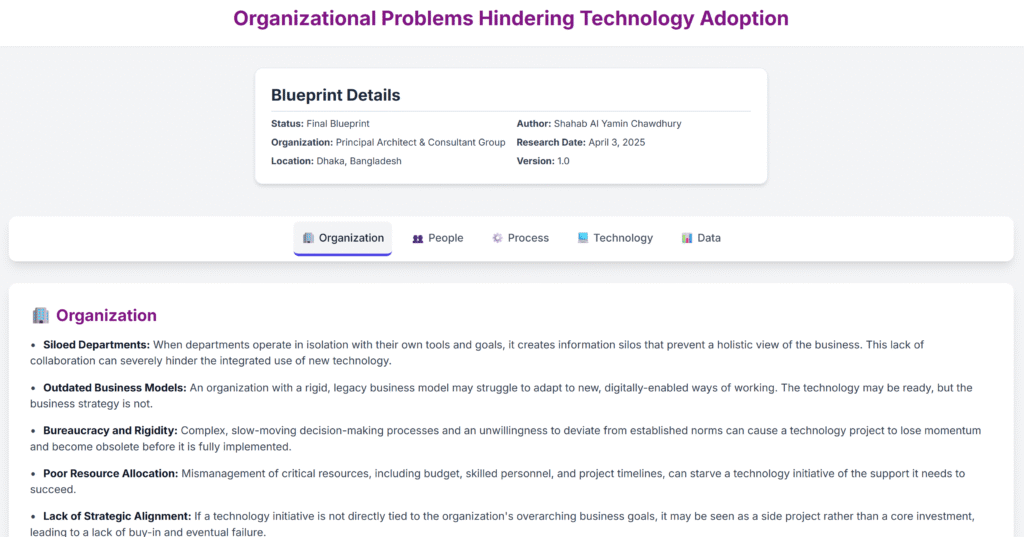
Read More on the Blueprint Section: https://www.mobs-bd.org/wp-content/uploads/2025/08/Organizational-Problems-Hindering-Technology-Adoption.html