 Reading Time: 3 minutes
Delivery management in software development ensures software products are planned, developed, tested, and delivered efficiently, on time, and with high quality. The software development life cycle (SDLC) encompasses the planning, development, testing, deployment, and maintenance of software systems. It provides a structured approach to ensure the successful delivery of software products to end-users.
Overview of Software Delivery Management (SDM)
Software Delivery Management (SDM) is the structured process of overseeing the entire lifecycle of software projects, from planning to deployment and monitoring. It focuses on coordinating teams, optimizing resources, and ensuring that software meets user expectations and organizational goals. SDM integrates agile methodologies, DevOps practices, and CI/CD pipelines to allow teams to adapt quickly to changing requirements and deliver incremental value.
What are the differences when it comes to the delivery lead vs. product owner?
- The delivery lead is responsible for overseeing the overall software delivery process, ensuring coordination and collaboration among the development teams, stakeholders, and clients.
- On the other hand, the product owner represents the customer’s interests and ensures that the software meets their requirements and expectations.
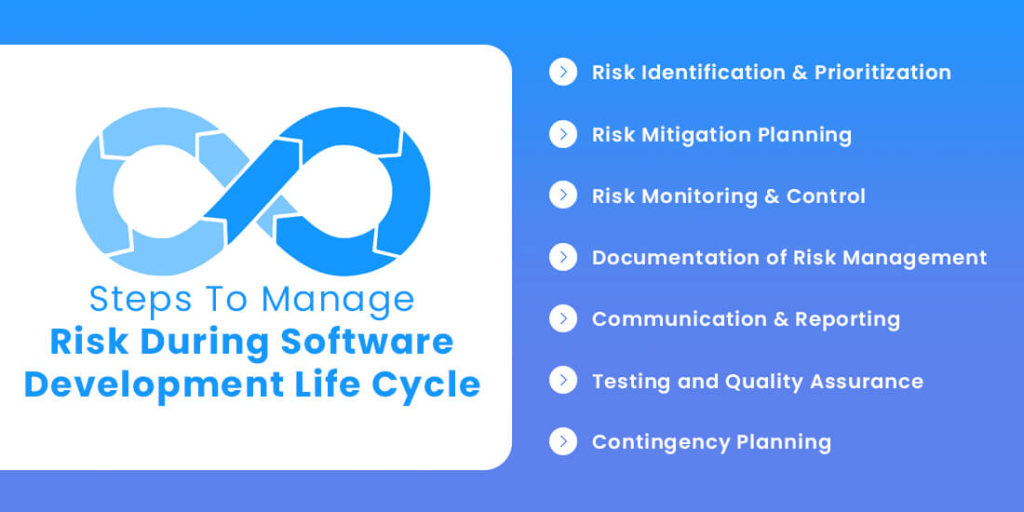
Risk Management in Software Development
- Not fully understand architecture design, data flow diagram, software requirement specification, technical requirement specification, entity relationship diagram, Inter-connected API documentation etc.
- Programmatic risks
- Quality risks
- Operational Risks stem from day-to-day issues such as insufficient resources, lack of skilled personnel, poor task management, and inadequate communication. These risks can disrupt workflows and reduce team efficiency and will affect delivery timeline
- Understanding roles of each developer and overlapping roles, activities, and tasks
- Staring to develop – but not fully prepared, did not get the big picture of 5W1H
- Development task outlined – yet not sequentially projected, which after which | need of hierarchy were not understood
- Not thinking like a manager who knows the total project yet not being able to describe
- Code comments – not fully descriptive or too short, and missing comments
- Long non-sequential layout instead of grouping and sequential code structure
Key Components of Delivery Management
- Planning: Establishing timelines, defining deliverables, allocating resources, and prioritizing backlog items. Planning also involves mapping work into iterations or release increments and assessing technical dependencies and team capacity.
- Development: Coding, integration, and initial testing. Best practices such as version control, automated testing, and continuous integration are critical to maintain efficiency and quality.
- Delivery: Rigorous testing, validation, and deployment. This includes user acceptance testing (UAT), performance testing, and ensuring the software meets predefined standards.
- Monitoring: Tracking progress, gathering feedback, and using analytics to identify bottlenecks. Continuous monitoring allows teams to refine processes and improve future releases.
Role of a Delivery Manager
A delivery manager oversees the SDM process, ensuring that projects are delivered on time, within scope, and according to quality standards. Responsibilities include:
- Coordinating between developers, QA, project managers, and clients.
- Defining and executing delivery strategies, including release cycles and deployment plans.
- Managing dependencies, risks, and issue tracking.
- Facilitating communication and collaboration to break down silos.
- Ensuring technical quality through code reviews, testing, and adherence to standards.
Delivery Planning
- Delivery planning is a structured approach to organize how software work moves from approved requirements to production release. It involves:
- ProjectManager
- Prioritizing backlog items and mapping them into iterations or release increments.
- Stress-testing assumptions and adjusting for risks.
- Creating a delivery plan that outlines milestones, release targets, and sequencing of work.
- Coordinating multi-team activities, phased rollouts, and integration testing.
Benefits of Effective Delivery Management
- Timely Delivery: Ensures software is released according to schedule.
- Quality Assurance: Reduces defects and rework through structured testing and validation.
- Resource Optimization: Efficiently allocates team capacity and tools.
- Customer Satisfaction: Aligns product features with user needs and market demands.
- Operational Efficiency: Streamlines processes, reduces costs, and improves ROI.